Year-Round Residents
Birds you can see any day of the year
These 12 species make Arlington their permanent home. Learn to identify them and you'll always have something to watch, no matter the season.
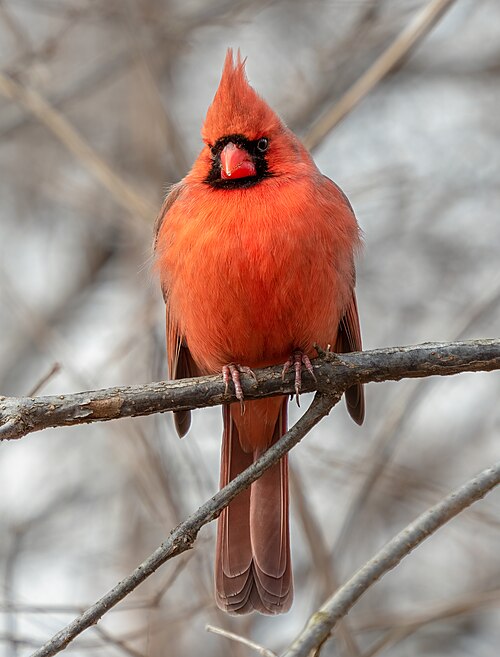
Northern Cardinal
Cardinalis cardinalis
Arlington's most recognizable bird. Males are brilliant red with a crest and black mask; females are warm brown with red accents. Appears in about 52% of local bird checklists year-round.
Photo: Wikimedia Commons · CC BY 2.0
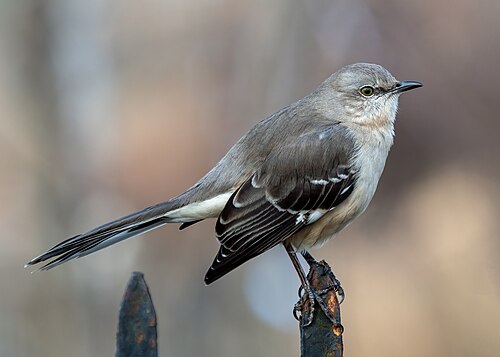
Northern Mockingbird
Mimus polyglottos
Texas's state bird and Arlington's loudest resident. Mimics dozens of other bird songs, often continuing through the night. Gray with white wing patches visible in flight.
Photo: Wikimedia Commons · CC BY-SA 3.0
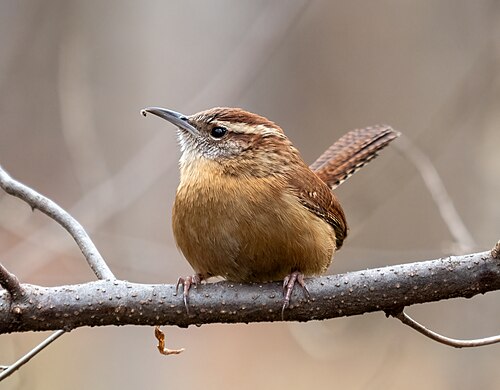
Carolina Wren
Thryothorus ludovicianus
Small but mighty — reddish-brown body, bold white eyebrow stripe, and a voice far louder than its size suggests. Secretive by nature; you'll hear "teakettle-teakettle!" before you see it.
Photo: Wikimedia Commons · CC BY-SA 2.0
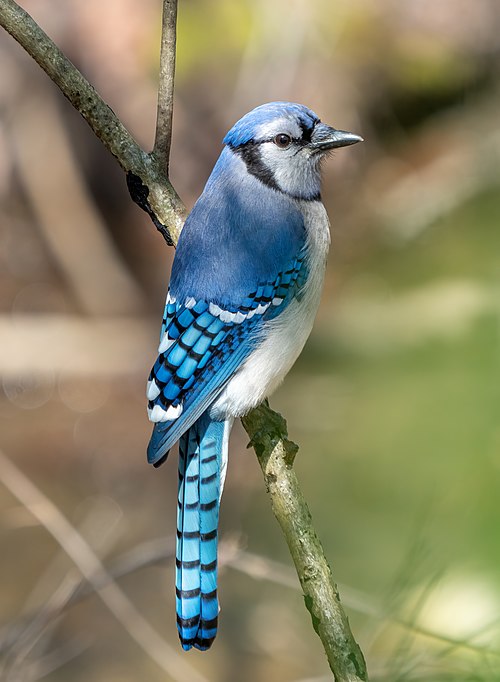
Blue Jay
Cyanocitta cristata
Bold, intelligent, and unmistakable with vivid blue, white, and black plumage. Active and vocal year-round — especially in late summer when family groups move through Arlington neighborhoods together.
Photo: Wikimedia Commons · CC BY 2.0
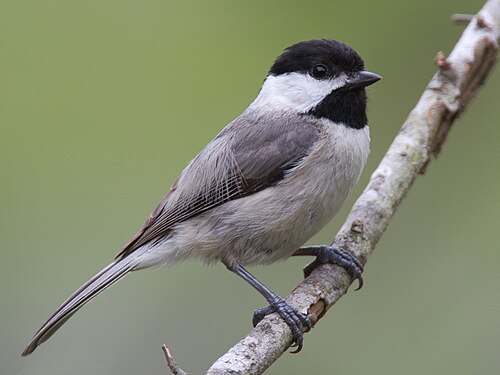
Carolina Chickadee
Poecile carolinensis
Small, acrobatic, and fearless. Black cap, black bib, white cheeks, soft gray sides. One of the friendliest feeder birds in Arlington — will often visit within minutes of a new feeder going up.
Photo: Dan Pancamo · CC BY-SA 2.0
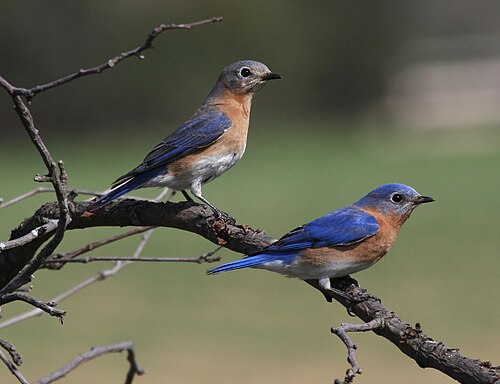
Eastern Bluebird
Sialia sialis
One of North America's most beloved birds. Males vivid blue above with a warm rusty-orange breast. Attracted to open, grassy areas — a properly built nest box with a 1.5-inch entrance hole is the surest way to bring them in.
Photo: Wikimedia Commons · CC BY-SA 2.0
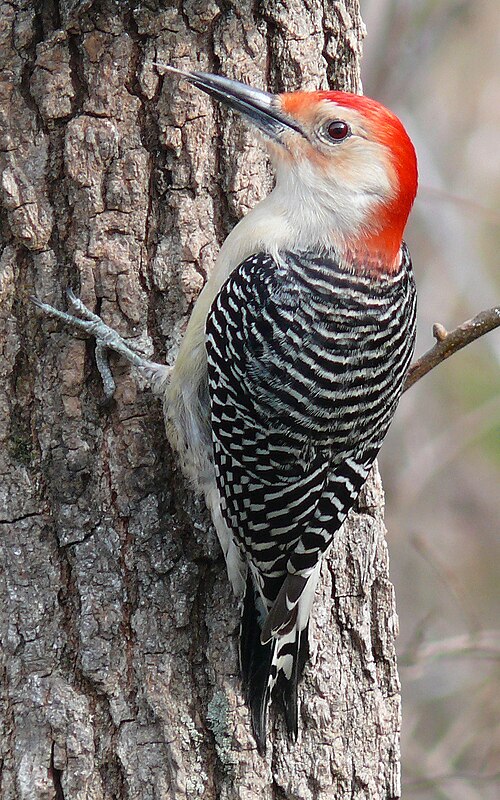
Red-bellied Woodpecker
Melanerpes carolinus
Striking red cap and black-and-white ladder-patterned back. The reddish belly patch is subtle — you'll notice the loud, rolling call first. A reliable year-round Arlington visitor at suet feeders.
Photo: Wikimedia Commons · CC BY-SA 2.0
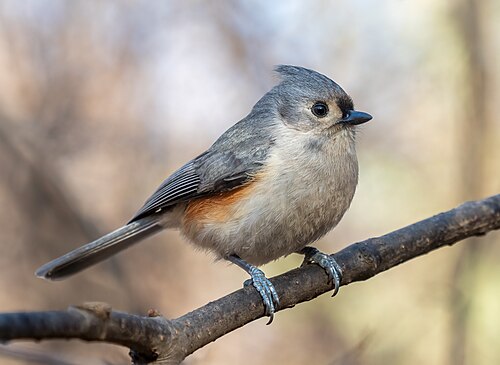
Tufted Titmouse
Baeolophus bicolor
Perky gray bird with a pointed crest, rust-colored flanks, and oversized dark eyes. Bold and inquisitive — one of the most entertaining backyard visitors in Arlington, especially at sunflower feeders.
Photo: Wikimedia Commons · CC BY 2.0
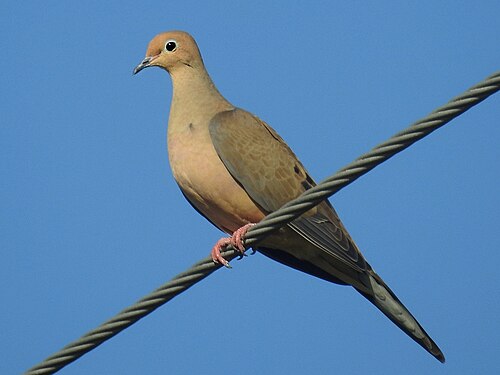
Mourning Dove
Zenaida macroura
Soft grayish-brown with a long pointed tail and gentle mournful cooing. One of the most abundant birds in Arlington — usually foraging quietly on the ground beneath feeders or on power lines.
Photo: Wikimedia Commons · CC BY-SA 3.0
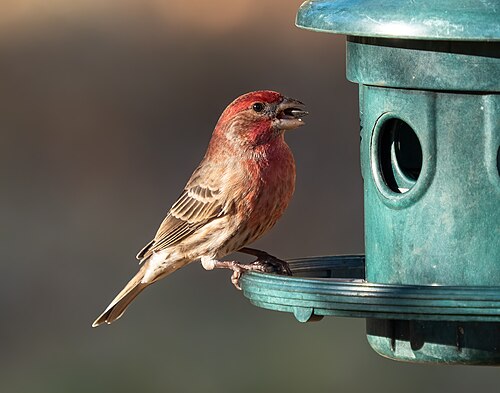
House Finch
Haemorhous mexicanus
Males have a rosy-red head, breast, and rump — intensity varies by individual. Highly social, traveling in cheerful flocks. Enthusiastic year-round feeder visitors throughout Arlington.
Photo: Wikimedia Commons · CC BY 2.0
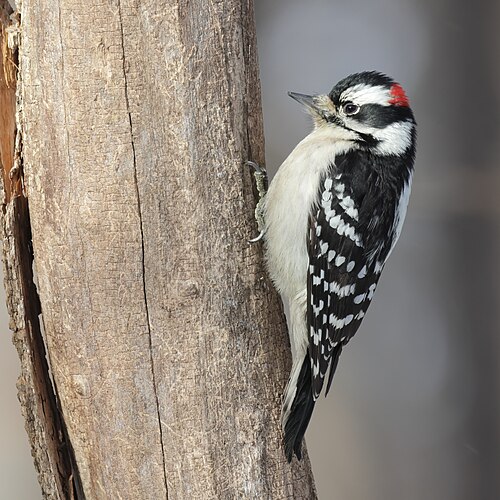
Downy Woodpecker
Dryobates pubescens
The smallest woodpecker in North America. Black and white with a small red patch on males. A reliable visitor at Arlington suet feeders — look for it hitching along branches and fence posts.
Photo: Wikimedia Commons · CC BY-SA 3.0
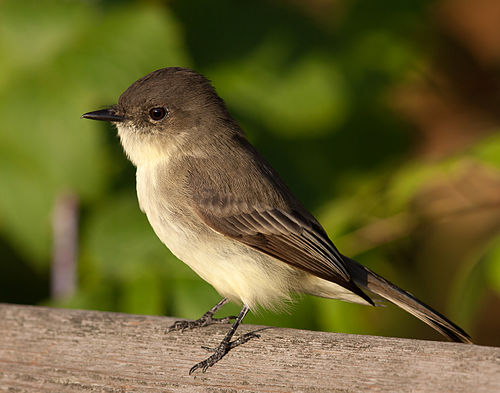
Eastern Phoebe
Sayornis phoebe
A compact flycatcher with a dark head and the distinctive habit of bobbing its tail. Common near Arlington waterways and wooded edges, sallying out from perches to snatch insects mid-air.
Photo: Wikimedia Commons · CC BY 2.0